Ferrite vs Neodymium Motors — A Technical Comparison
How ferrite permanent magnet motors compare to neodymium across cost, performance, supply chain, and efficiency.
| Property | Ferrite (EKMO) | Neodymium (Conventional) |
|---|---|---|
| Magnet Material Cost | Low — globally abundant | High — volatile pricing |
| Supply Chain Risk | None — no single-country dependency | High — 90%+ from China |
| Achievable Efficiency | IE5+ (proven by EKMO) | IE5+ (standard approach) |
| Power Range | 37kW – 1MW | 37kW – 1MW+ |
| Temperature Stability | Excellent — low demagnetization risk | Moderate — sensitive to heat |
| Demagnetization Risk | Low | Higher at elevated temperatures |
| Environmental Impact | Low — no rare earth mining | High — toxic mining process |
| Motor Topology | SMPM (Surface Mounted PM) | Various (IPM, SMPM) |
Magnet Material Cost
Low — globally abundant
High — volatile pricing
Supply Chain Risk
None — no single-country dependency
High — 90%+ from China
Achievable Efficiency
IE5+ (proven by EKMO)
IE5+ (standard approach)
Power Range
37kW – 1MW
37kW – 1MW+
Temperature Stability
Excellent — low demagnetization risk
Moderate — sensitive to heat
Demagnetization Risk
Low
Higher at elevated temperatures
Environmental Impact
Low — no rare earth mining
High — toxic mining process
Motor Topology
SMPM (Surface Mounted PM)
Various (IPM, SMPM)
Why Ferrite Matches Neodymium at IE5+
Ferrite magnets have lower energy density than neodymium. Conventional motor design cannot achieve top efficiency classes with ferrite — which is why the industry has relied on rare earths.
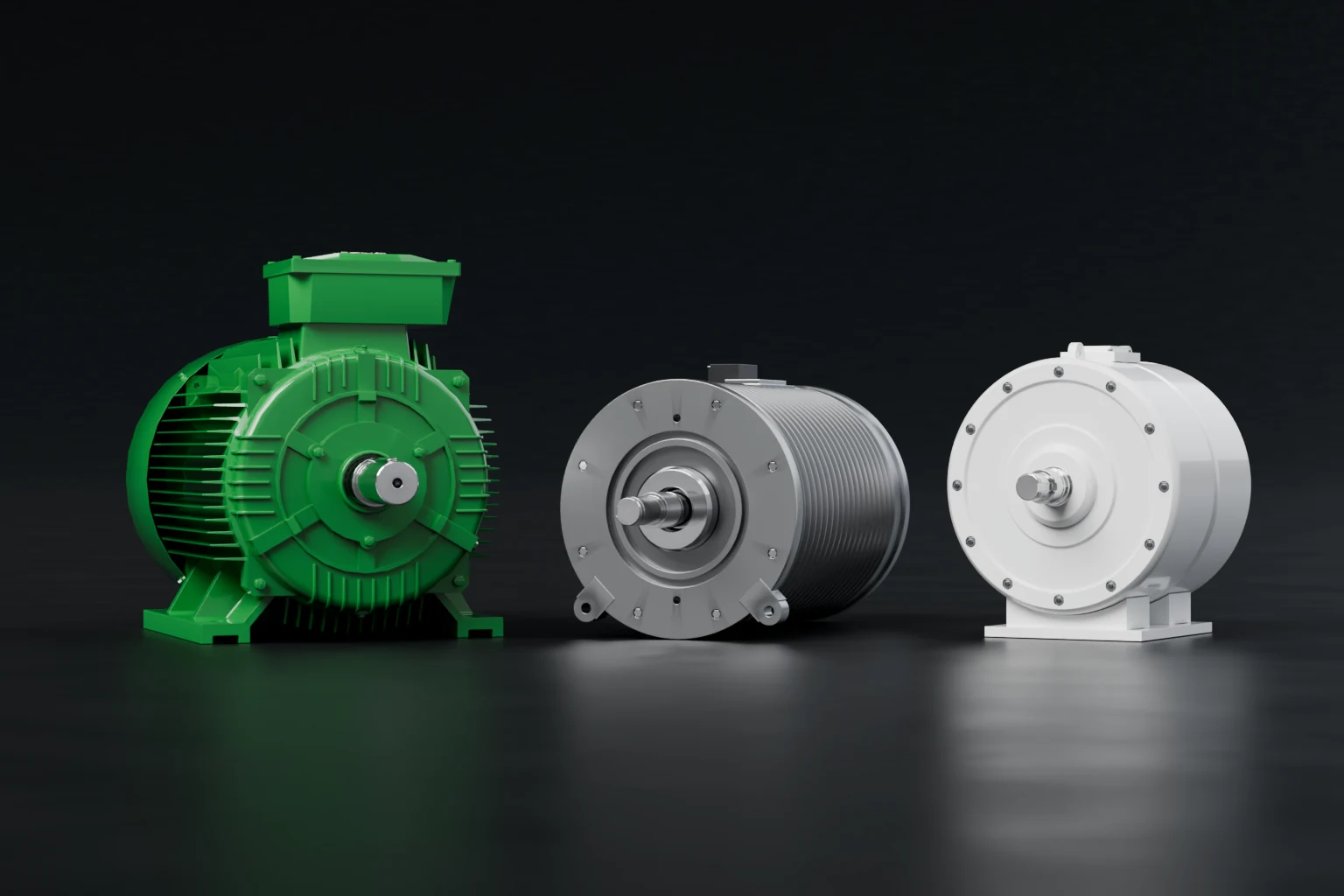
EKMO's approach is different. Through advanced electromagnetic design of the SMPM (Surface Mounted Permanent Magnet) motor topology, we compensate for ferrite's lower remanence. The result: IE5+ efficiency — the same class achieved by neodymium-based motors.
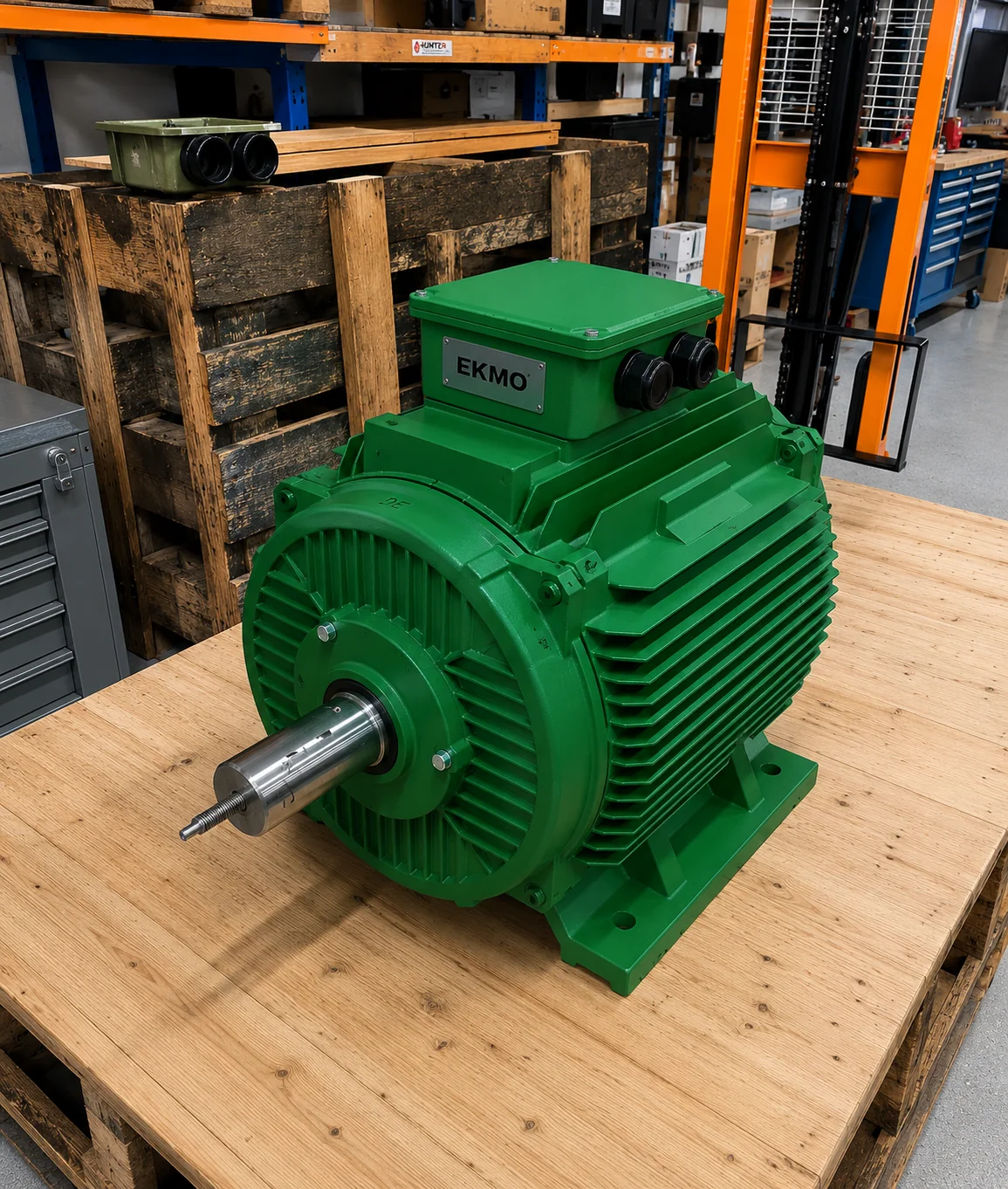
This is not a theoretical claim. EKMO's motor designs have been validated through electromagnetic simulation across the full power range of 37kW to 1MW, with IEC standard housing and IC411 self-ventilation cooling.
Supply Chain Comparison
Over 90% of the world's rare earth elements are mined or processed in China. This creates a single point of failure for any motor manufacturer relying on neodymium. Export restrictions, trade disputes, and price spikes — such as the 2011 rare earth crisis — have repeatedly disrupted supply chains.
Ferrite magnets are made from iron oxide and strontium carbonate. Both materials are globally abundant, inexpensive, and sourced from multiple countries. Choosing ferrite eliminates rare earth dependency entirely.
Learn more about how ferrite permanent magnet motors work: What Is a Ferrite Permanent Magnet Motor?
Read about the broader supply chain implications: Rare Earth Supply Chain Risk for Motor Manufacturers
EKMO's IE5+ ferrite motor technology is available to license.